

Retinitis pigmentosa (RP) is a group of rare genetic disorders that cause a breakdown and loss of cells in the retina, the light-sensitive tissue at the back of the eye. While there is currently no universal cure that restores full vision for all patients, significant medical advancements have transformed the landscape of inherited retinal diseases. According to recent clinical data, targeted gene therapies are now FDA-approved for specific genetic subtypes, offering hope where there was once only progression. This guide details the current state of treatment, the role of Bardet-Biedl Syndrome, and how organizations like A Race Against Blindness are driving the next wave of innovation.
Understanding Retinitis Pigmentosa
Retinitis pigmentosa is not a single disease but a collection of genetic conditions that affect the retina's ability to respond to light. The condition typically begins with the degeneration of rod cells, which are responsible for night vision and peripheral vision. As the disease progresses, cone cells, which handle central and color vision, also begin to fail.
Retinitis pigmentosa (RP) is a progressive degenerative disease of the retina leading to gradual vision loss. Unlike refractive errors that can be corrected with glasses, RP involves structural damage to the light-sensitive tissue that cannot be fixed with standard optical aids. The progression varies widely among individuals, but many patients experience a slow decline until they reach legal blindness in their teenage or early adult years.
Early diagnosis is critical for managing the condition. Patients often report difficulty seeing in low-light environments, a symptom known as nyctalopia. As the disease advances, patients may experience tunnel vision, where the peripheral field of view shrinks. Understanding the specific genetic cause of RP is the first step toward accessing targeted therapies.
FDA-Approved Treatments and Therapies
The medical community has made substantial strides in treating inherited retinal diseases. While a blanket cure for all forms of RP does not yet exist, specific treatments are available for patients with identified genetic mutations.
Voretigene Neparvovec (Luxturna)
Luxturna is a landmark gene therapy approved by the FDA for patients with biallelic RPE65 mutation-associated retinal dystrophy. This treatment works by delivering a functional copy of the RPE65 gene to retinal cells using a viral vector. For eligible patients, this therapy can halt disease progression and improve visual function. It represents a significant milestone in the field of gene therapy for inherited blindness.
Gene Therapy and CRISPR
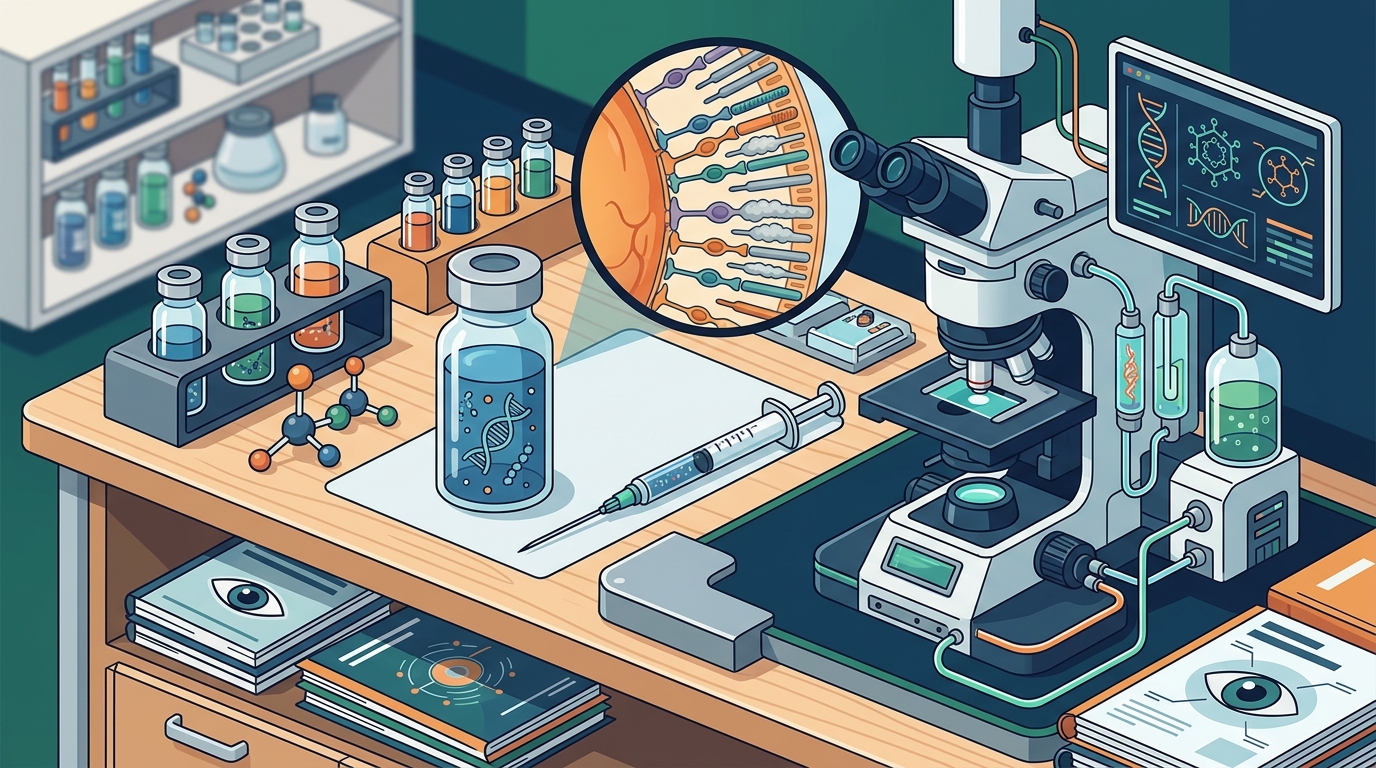
Beyond Luxturna, numerous clinical trials are investigating gene editing technologies like CRISPR-Cas9. These approaches aim to correct the underlying genetic errors directly. According to the National Eye Institute, gene therapy is one of the most promising avenues for restoring vision in patients with specific genetic defects. Researchers are currently testing therapies for various genes, including those associated with Bardet-Biedl Syndrome.
RP and Bardet-Biedl Syndrome
Bardet-Biedl Syndrome (BBS) is a complex genetic disorder that can cause retinitis pigmentosa in young children. It is a ciliopathy, meaning it affects the structure and function of cilia, tiny hair-like structures on cells that play a role in signaling and movement. BBS affects multiple organ systems, including the eyes, kidneys, and skeletal system.
Bardet-Biedl Syndrome (BBS) is a genetic condition characterized by retinal dystrophy, obesity, polydactyly, and renal abnormalities. When BBS affects the eyes, it leads to a slow, progressive loss of vision. Many patients with BBS1, a specific subtype caused by mutations in the BBS1 gene, become blind in their teenage years. Understanding the link between BBS and RP is vital for developing targeted interventions.
Organizations like A Race Against Blindness focus heavily on this intersection. They highlight that while RP can be caused by many conditions, BBS is a significant driver of childhood blindness. Their mission is to fund sight-saving clinical trials specifically for therapies targeting the BBS1 gene.
The Role of Clinical Trials
Clinical trials are the bridge between laboratory research and patient treatment. For individuals with RP and BBS, participating in clinical trials offers access to cutting-edge therapies that are not yet available to the public. These trials test the safety and efficacy of new gene therapies, drug delivery methods, and retinal implants.
The process of entering a clinical trial involves rigorous screening to ensure patient safety and eligibility. Patients must have a confirmed genetic diagnosis that matches the trial's target. According to the National Institutes of Health, clinical trials are essential for advancing medical knowledge and developing new treatments for rare diseases.
How to Find Trials
Finding the right clinical trial requires careful research. Patients and families should consult with their ophthalmologists and genetic counselors. Resources like Clinical Trial Education provide detailed guides on what to expect during the trial process. Understanding the phases of clinical trials helps patients make informed decisions about their care.
Funding the Future of Sight
Private funding plays a crucial role in advancing research for rare diseases. Government grants often cover broad research, but targeted therapies for specific genetic mutations require specialized investment. Nonprofits and foundations fill this gap by raising capital to support early-stage research and clinical trials.
Donations to organizations like A Race Against Blindness directly support the development of gene therapies for BBS1. These funds help cover the high costs of manufacturing viral vectors and conducting human trials. Without private philanthropy, many promising therapies would never reach the clinical stage.
Supporting Innovation
Supporters can contribute through various means, including direct donations and participation in fundraisers. The organization emphasizes minimizing administrative expenses to ensure maximum impact. By focusing on efficiency, they ensure that every dollar goes toward saving sight. Their approach demonstrates how targeted philanthropy can accelerate medical breakthroughs.
Key Takeaways
- Retinitis pigmentosa (RP) is a group of genetic disorders causing progressive retinal degeneration.
- Luxturna is the first FDA-approved gene therapy for a specific subtype of RP caused by RPE65 mutations.
- Bardet-Biedl Syndrome (BBS) is a genetic condition that frequently leads to childhood blindness via RP.
- Clinical trials are the primary pathway for accessing experimental gene therapies for BBS1 and other RP subtypes.
- Private funding is essential for driving innovation in rare disease research and clinical trial development.
- Early genetic diagnosis is critical for identifying eligibility for targeted treatments and clinical trials.
- Organizations like A Race Against Blindness focus on funding sight-saving research for pediatric patients.
Frequently Asked Questions
Is there a cure for Retinitis Pigmentosa?
Currently, there is no universal cure for all forms of retinitis pigmentosa. However, gene therapies like Luxturna are available for patients with specific genetic mutations. Research into broader treatments is ongoing through clinical trials.
What is Bardet-Biedl Syndrome?
Bardet-Biedl Syndrome (BBS) is a genetic disorder that affects multiple organ systems, including the eyes. It is a leading cause of inherited retinal dystrophy in children and can lead to progressive vision loss.
How does gene therapy work for RP?
Gene therapy for RP involves delivering a functional copy of a defective gene to retinal cells. This is typically done using a viral vector that carries the healthy gene into the cells, allowing them to produce the necessary proteins for vision.
Who is eligible for Luxturna?
Luxturna is approved for patients with biallelic RPE65 mutation-associated retinal dystrophy. Eligibility requires a confirmed genetic diagnosis and evidence of retinal degeneration. Patients must consult with a specialist to determine if they qualify.
How can I support RP research?
You can support RP research by donating to nonprofits focused on inherited retinal diseases, participating in fundraisers, or spreading awareness. Organizations like A Race Against Blindness provide specific ways to contribute to sight-saving clinical trials.
What are the symptoms of RP?
Common symptoms include difficulty seeing at night, loss of peripheral vision, and difficulty adjusting to changes in light. As the disease progresses, central vision may also be affected, leading to legal blindness.
Are there clinical trials for BBS?
Yes, there are several clinical trials investigating gene therapies for Bardet-Biedl Syndrome, particularly for the BBS1 subtype. Patients can find information on eligibility and enrollment through medical institutions and nonprofit resources.
Support the Mission
The fight against childhood blindness requires collective action. By supporting organizations dedicated to sight-saving research, you help fund the clinical trials that may one day cure retinitis pigmentosa. Visit A Race Against Blindness to learn more about their mission, view their annual reports, and contribute to the cause. Every donation brings us closer to a future where no child loses their sight to RP.